

How could you sense in case you had the power to restore your PC on your own each time it is needed? Perhaps you are experiencing mistakes, typical instability, or similar to optimizing your PC to run at top performance. With a little bit of information and some tremendous software programs, this is a lot less difficult than it appears.
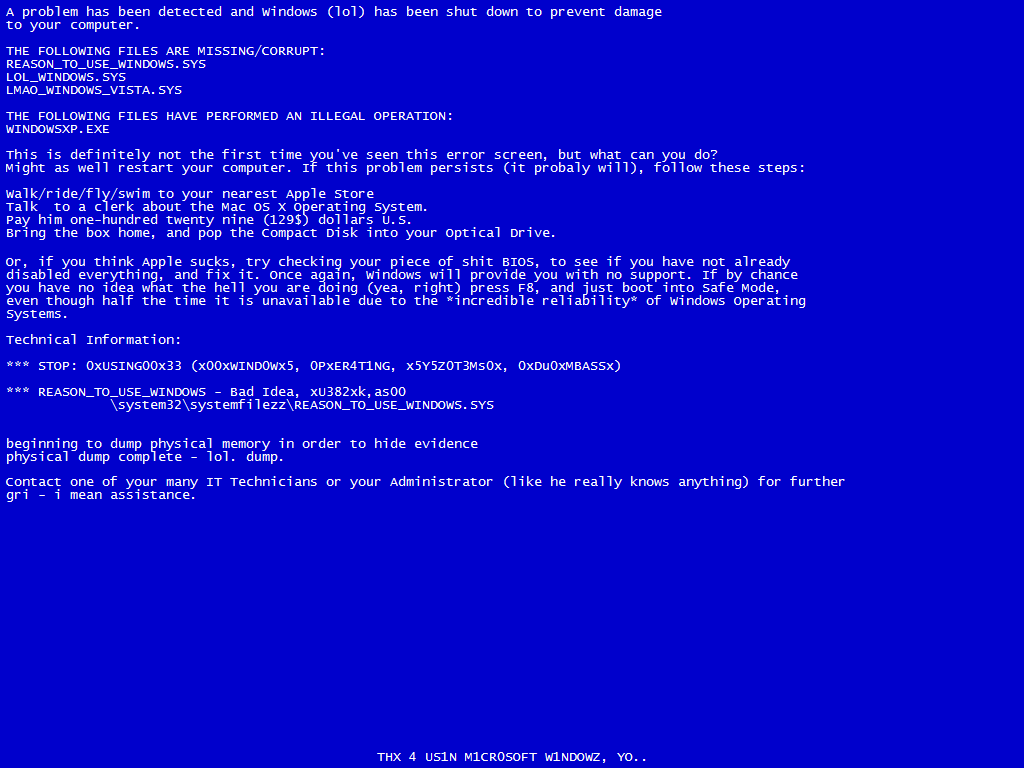
One commonplace expectation approximately owning a PC is that it’ll in no way freeze, crash, or lose data. Until the realization comes someday, whilst you try to check your email, and your screen completely freezes. Suddenly, an unpleasant-looking blue display appears with white letters displaying you an entire bunch of gobbly-gook that you have never meant before. Welcome to the Blue Screen of Death (BSOD). Unsure what you must do, you try rebooting the PC. Yet every other BSOD. For a few users, this tends to be the moment that panic sets in. For others, this is probably simply any other incident of PC rage. In any event, it looks as if your PC wishes a little TLC.
Unfortunately, this example is all too commonplace. When customers buy their PCs, little or no information is given as to what kind of maintenance is required for the most desirable overall performance and to secure their records. Plug and play, so to speak. We undergo many attempts to protect and keep ourselves, our families, our automobiles, and our homes. Those equal efforts should be taken to protect your investment in your PC to ensure it is running smoothly. If you value the one’s e-mails, pics, mp3s, own family motion pictures, and financial data for your PC, then don’t forget what you will experience if it suddenly turns into long gone. If you don’t forget the reality of the funding required to hold the statistics you have, it’s a small fee to pay compared to dropping them.
Typically, these errors can be narrowed down to a single factor of failure: the Windows registry. The Registry is a database of keys and facts used to keep settings and alternatives for the Windows operating system. This includes control panel settings, hardware settings, and document institutions. Some software programs will even leverage the registry as an area to save settings.
READ MORE :
- An Incredible Guide to Use Social Media for Business
- Reasons to Travel to France – 5 Things You Might Not Have Thought About
- What to Know Before Exercising Stock Options
- How to Get Qualified Bloggers to Review Your Book
- The Taiwan-designed computer is now part of an ISS venture
Some registry settings may be international, meaning that the settings are equal for all users. For instance, any hardware settings will typically be international as they are required to keep the PC operational and cannot be customized from person user to. Other settings will be consumer-precise. This will make sure that every user’s unique settings can be retained (i., desktop settings, browser settings, email, etc.).
As components on the PC are used (whether or not it’s hardware, software program, or internal Windows procedures), those components can also get right to entry to the registry at any given time. Typically, the registry is accessed during Windows startup, hardware initialization, and anthe startup or use of a software program. Using a unique key call (determined whilst the software is mounted), the issue will name the registry with the key call related to a particular setting. If the registry reveals the key, it’ll return the cost that is contained within the key. The factor will then use this cost for the proper putting.
During the PC’s life, hardware peripherals are brought, new software is installed, alongside diverse updates and patches. Conversely, out-of-date hardware may be removed, and unused software is uninstalled. While all this is going on, your registry is being accessed and updated. As those movements update the registry, once in a while, they will upload or replace information incorrectly, or they will not be eliminated while components are uninstalled. The result is a bloated registry full of invalid or corrupt keys. As the registry will become increasingly bloated, tougher it becomes for Windows to locate entries inside the registry. Because of the volume of keys stored in the registry, the greater the number of keys, the longer it takes for Windows to find something. When it finds out what it is seeking out, there’s also an extra hazard that the access it determined is wrong or invalid.
As this example progresses, Windows will start to exhibit certain symptoms. The response time of the PC will progressively decrease to some extent, where the device is ultimately rendered useless. As the overall performance decreases, the likelihood of Windows mistakes, screen freezes, and device crashes will increase. You additionally increase the possibilities of irreversible harm to the PC (more specifically, the loss of valuable data).
The longer the problem is left unresolved, the harder it turns into troubleshooting. The better in advance that those problems can be located, the less complicated they may be to repair, and the less likely it will be which you would possibly suffer extreme results. Registry-associated errors can vary depending on the source of the issue. These mistakes might be particular to a particular software program or hardware installed at the PC, or related to a Windows configuration. The following issues are symptomatic of a corrupt registry:
- System Crashes
- Computer Freezing
- Missing record associations
- Missing startup applications
- Invalid tool drivers
- Invalid utility paths
- Missing DLL documents
- Missing assist documents
- Missing gadget fonts
- General Protection Fault mistakes
- Invalid Page Fault errors
- Fatal Exception errors
- Hardware mistakes
Keep in mind that it’s possible that errors will be a combination of more than one problem, and a corrupt registry is just part of it. So how, exactly, do you decide if your registry is corrupt? There are several steps involved in a way to diagnose a corrupt registry.

